
Chapter one, in which nothing makes sense, and that’s exactly the point. If you’ve spent any time online recently, you’ve encountered a strange creature with an unexplainable name doing something absurd, set to chaotic audio, and somehow it’s the funniest thing you’ve watched all week. Pippit’s Seedance 2.5 model lets creators build their own version of this exact chaos, turning a rough, absurd idea into a short, trend-ready video without any animation background.
Since “brainrot” content thrives on committing fully to nonsense, this one reads more like a chaotic storybook than a tutorial.
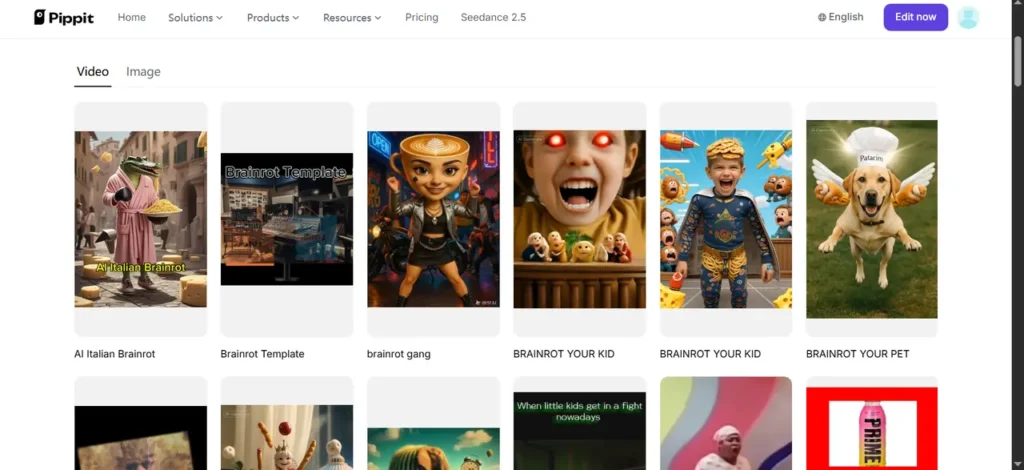
Chapter one: The creature is born
Every brainrot character starts with a single, weird visual hook — an object fused with a body part, an animal doing something a normal animal wouldn’t, a shape that shouldn’t move the way it moves. The less it needs to make sense, the better it usually performs.
Chapter two: The absurdity checklist
A few ingredients tend to show up across nearly every viral entry in this genre:
- A visually strange or nonsensical character design.
- Chaotic, fast-paced motion that doesn’t follow normal physical logic.
- A nonsense name or phrase repeated with total confidence.
- Sound and visual mismatch — calm audio over chaotic motion, or vice versa.
Chapter three: Summoning your creature
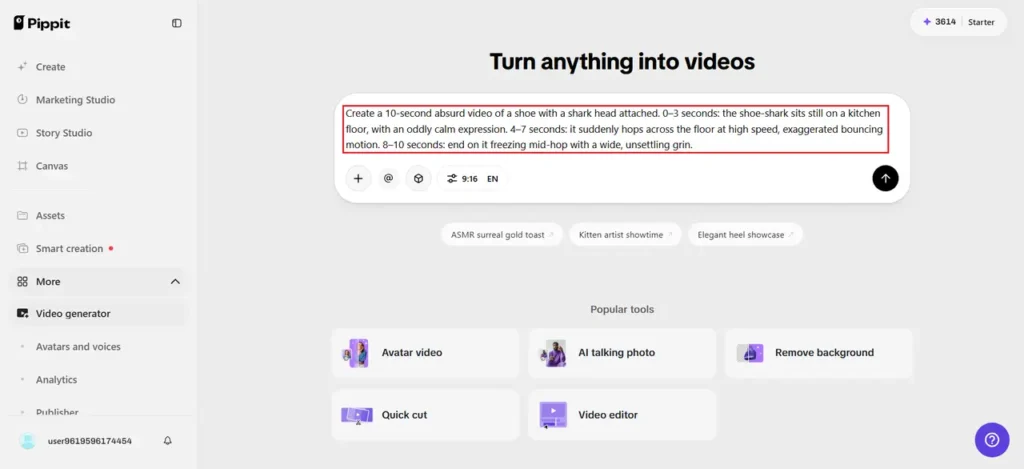
Step 1: Describe your character and its chaos in a time-stamped prompt
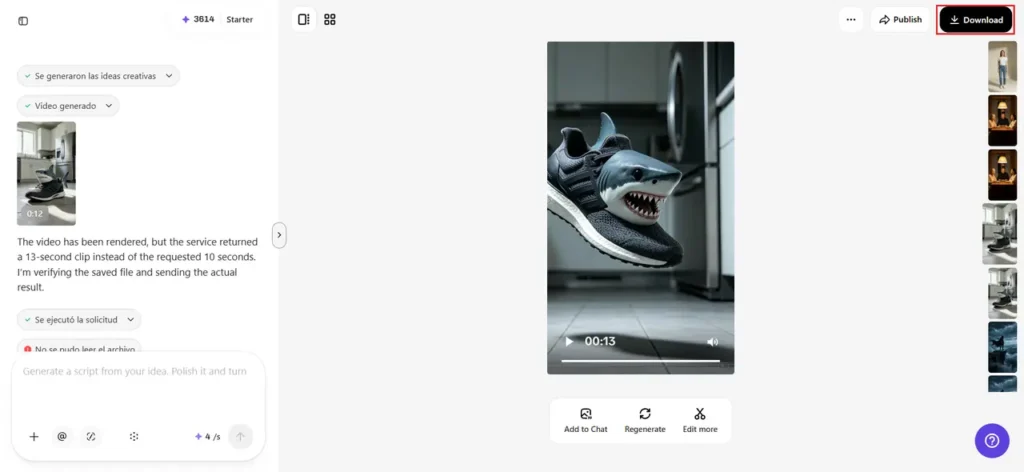
Open Pippit’s Video Generator and select Seedance 2.5. Write a time-stamped prompt that clearly describes the absurd concept.
For example: Create a 10-second absurd video of a shoe with a shark head attached. 0–3 seconds: the shoe-shark sits still on a kitchen floor, with an oddly calm expression. 4–7 seconds: it suddenly hops across the floor at high speed, exaggerated bouncing motion. 8–10 seconds: end on it freezing mid-hop with a wide, unsettling grin.
Step 2: Adjust the pacing however you feel like
Review the draft and ask the only question that actually matters for this format — is it strange enough? If the motion feels too normal or the concept too coherent, push the prompt further into contradiction and exaggeration.
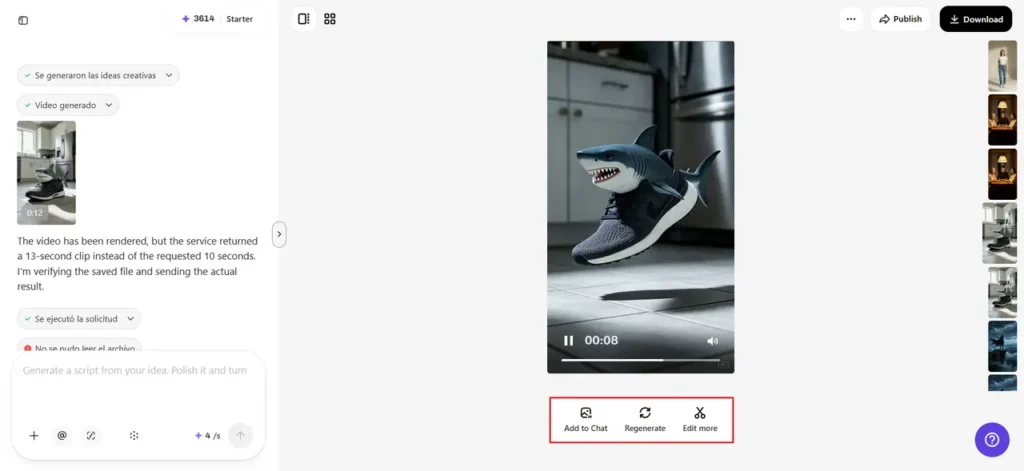
Step 3: Extend into longer sequence, then export
If the joke deserves a second escalation, use the extension feature to add another chaotic beat without starting over. Export quickly, since trend relevance in this category moves fast.
Chapter four: What makes Seedance 2.5 fit for chaos
Fixed duplication issues, mostly for reliability
Previously known “twin” duplication problems have been addressed, which at least keeps unintended glitches from accidentally becoming part of the joke when that wasn’t the plan.
Multimodal fusion for fast concept testing
Combining a rough sketch, a reference image, and a written description in one generation, supported by input of up to 50 pieces of material, lets creators quickly test different absurd combinations without starting fresh each time.
Reduced “AI look” that still allows intentional weirdness
Improved texture realism means the base rendering holds together visually even when the concept itself is deliberately nonsensical, which oddly makes the absurdity land harder than a rough, glitchy-looking clip would.
Chapter five: Giving your creature a voice
Some of the most memorable entries in this genre pair a strange visual with an equally strange vocal delivery, and pairing your generated character with a voice track from a tool like SeedAudio 1.5 can add that same chaotic audio layer without needing to record anything yourself.
Chapter six: A loose creative process
- Start from a genuinely random combination of two unrelated objects or animals.
- Don’t overthink the “meaning” — this format rarely has one.
- Repeat the character across a short series once one version catches on.
- Treat this as a playful AI video generator for an entire cast of absurd characters, not a single one-off clip.
Chapter seven: Knowing when to stop
Even chaos has a ceiling — a video crammed with too many competing absurd elements can undercut its own joke by becoming genuinely hard to follow. The strongest entries in this format usually commit to one weird idea and push it as far as it can go, rather than combining five.
Chapter eight: naming your creature
A great creature deserves a name nobody could have predicted — ideally something that sounds vaguely official despite meaning nothing at all. The name often ends up doing as much comedic work as the visual itself, since a confidently delivered nonsense word tends to stick in a way a purely descriptive name never does.
Chapter nine: the sequel nobody asked for
Once a character catches on, the natural next move is a sequel clip — the same creature in a new absurd scenario, or a second creature entering its world entirely. Trend-based audiences tend to reward consistency here; seeing a familiar chaotic character return is often funnier than an entirely new one.
Chapter ten: crossing over with other chaos
Some of the funniest entries in this genre come from combining two previously separate absurd characters into one scene, letting their established personalities collide. This works especially well once each character already has a recognizable “bit,” since the humor comes from the mismatch between two established chaotic identities meeting for the first time.
Chapter eleven: reading the comment section
Trend-based content often gets its best material from audience reactions — a specific phrase or reaction in the comments can become the seed for the next video. Paying attention to what specifically made people laugh, rather than assuming it was the whole concept, helps sharpen future entries in a series.
Chapter twelve: when to retire a bit
Even the most beloved chaotic character eventually runs its course, and forcing a format long after audience interest has faded usually reads as try-hard rather than funny. Recognizing when a bit has peaked, and being willing to move on to the next absurd idea, keeps a creator’s output feeling fresh rather than repetitive.
The end (for now)
Some of the internet’s favorite content is proof that a genuinely committed, well-timed piece of nonsense can outperform something polished and sensible. With Seedance 2.5 inside Pippit, your own strange idea doesn’t have to stay stuck in a group chat.
Next time an absurd combination pops into your head, it might be worth opening Pippit and finally letting it exist.