Whether evaluating an early-stage venture or steering an established enterprise, accounting serves as the foundational operating system of global commerce. To master financial literacy in business, understanding what is accounting begins with recognizing it as the structured framework of identifying, measuring, recording, verifying, summarizing, and communicating economic transactions to enable data-backed capital allocation decisions. Far from a mere compliance requirement, this discipline provides enterprise executives, lenders, regulatory bodies, and investors with the objective metrics required to verify corporate solvency, maintain statutory compliance, and guide capital efficiently.
At an operational level, accounting fulfills four primary objectives:
- Systematic Transaction Recording: Documenting commercial transactions chronologically within an auditable general ledger.
- Statutory Compliance: Maintaining strict adherence to statutory filing deadlines, corporate tax codes, and regulatory mandates such as the Sarbanes-Oxley Act (SOX).
- Financial Position Verification: Producing standardized financial statements that disclose enterprise assets, liabilities, operating margins, and working capital.
- Capital Allocation: Supplying internal management and external capital providers with historical performance data to direct long-term investments.
Accounting Definition: The Universal Language of Business
The formal accounting definition establishes the discipline as an enterprise information infrastructure that tracks economic activities, converts raw transactional data into structured financial reports, and communicates fiscal performance to internal and external stakeholders.
Often referred to as the “language of business,” accounting is frequently conflated with routine bookkeeping. However, the two functions perform distinct operational roles:
- Bookkeeping represents the administrative, mechanical process of recording transactional events: capturing vendor invoices, logging customer receipts, processing payroll, and conducting routine bank reconciliations.
- Accounting encompasses the analytical and interpretive framework built on top of that transactional data. It synthesizes raw ledger entries into GAAP- or IFRS-compliant financial disclosures, evaluates solvency ratios, assesses working capital efficiency, calculates corporate tax obligations, and informs strategic capital budgeting.
Meaning of Accounting in Practical Commerce
The operational meaning of accounting centers on converting high-volume, disparate commercial activities into a coherent, standardized model of enterprise health. On any given business day, an enterprise may issue customer invoices, procure inventory on trade credit, capitalize plant assets, draw against revolving credit facilities, and award equity incentives.
Without established accounting standards, executive teams cannot verify real gross margins, commercial lenders cannot calculate debt service coverage ratios (DSCR), and institutional investors cannot build reliable discounted cash flow (DCF) valuation models. Accounting establishes uniform reporting discipline across these activities, enabling consistent performance analysis across competitive sectors and regulatory jurisdictions.
However, financial accounting is inherently bound by historical cost conventions and subjective management estimates, such as current expected credit loss (CECL) allowances under ASC Topic 326 and asset impairment testing, meaning reported figures must be evaluated alongside operating cash flows rather than viewed as isolated measures of enterprise worth.
Read Also: Fixed Expenses Meaning
Importance of Accounting in Corporate Strategy
Evaluating the commercial importance of accounting is vital at every stage of corporate development, from pre-revenue startups securing early lines of credit to publicly traded corporations navigating capital markets:
Cash Flow Visibility and Liquidity Planning:
Accounting systematically isolates operating, investing, and financing cash flows to expose liquidity shortfalls and structural working capital deficits before they threaten payroll obligations, debt service covenants, or vendor payment terms.
Unit Economics and Operational Margin Control:
By separating Cost of Goods Sold (COGS) from overhead Operating Expenses (OpEx), accounting allows controllers to isolate contribution margins, calculate break-even thresholds, and enforce budgetary discipline.
Internal Governance and Fraud Mitigation:
Establishing dual authorization thresholds, mandatory balance sheet reconciliations, and strict segregation of accounting duties builds an audit trail that lowers enterprise risk and deters asset misappropriation.
Institutional Capital Access:
Commercial banks, credit rating agencies, and institutional equity investors mandate multi-period, audited financial statements before underwriting debt covenants or funding capital rounds.
How Does Accounting Work? The General Ledger Framework
To examine how does accounting work across an operational enterprise, corporate finance teams employ the standardized double-entry framework formalized by Luca Pacioli. The structured data pipeline moves through the following stages:
- Source Documents: Invoices, receipts, contracts, and electronic bank settlement feeds.
- General Journal Entries: Chronological debits and credits assigned with numerical transaction IDs.
- General Ledger Posting: Ledger categorization mapped across balance sheet and income statement accounts.
- Unadjusted Trial Balance: Initial arithmetic verification of debit-credit equality.
- Period-End Adjusting Journal Entries: Accruals, prepayments, depreciation, and tax adjustments.
- Adjusted Trial Balance Verification: Final ledger reconciliation before preparing financial reports.
- Financial Statements Compilation: Preparation of the Balance Sheet, Income Statement, and Statement of Cash Flows.
Double-Entry Bookkeeping and the Core Accounting Equation
Double-entry bookkeeping mandates that every commercial transaction impacts a minimum of two separate accounts: one account receives a debit entry, and another receives an offsetting credit entry of identical monetary value. This mechanism keeps corporate ledgers perpetually balanced across the fundamental accounting equation:
$$\text{Assets} = \text{Liabilities} + \text{Equity}$$
To analyze how cumulative operating profits build corporate equity over fiscal periods, finance teams use the expanded accounting equation:
$$\text{Assets} = \text{Liabilities} + \text{Contributed Capital} + \text{Retained Earnings}_{\text{Beginning}} + (\text{Revenues} – \text{Expenses}) – \text{Dividends}$$
The 3 Golden Rules of Accounting
Traditional ledger mechanics classify commercial accounts into three distinct categories, each governed by an operational rule:
| Account Classification | Foundational Ledger Rule | Practical Commercial Application |
| Personal Accounts | Debit the receiver, credit the giver | Settling an outstanding supplier balance or collecting trade accounts receivable. |
| Real Accounts | Debit what comes in, credit what goes out | Purchasing plant machinery or liquidating idle equipment for cash reserves. |
| Nominal Accounts | Debit all expenses and losses, credit all income and gains | Recognizing payroll liabilities, cloud software fees, or recurring contract revenue. |
The Corporate Chart of Accounts (COA) Architecture
A standardized corporate Chart of Accounts categorizes general ledger accounts using structured numerical coding:
- 1000–1999 (Assets): Operating cash, trade accounts receivable, inventory, prepaid assets, and property, plant, and equipment (PP&E).
- 2000–2999 (Liabilities): Trade accounts payable, accrued operational payroll, deferred unearned revenue, and long-term notes payable.
- 3000–3999 (Equity): Common stock, additional paid-in capital (APIC), and accumulated retained earnings.
- 4000–4999 (Revenue): Direct product sales, recurring software subscriptions, and professional service retainers.
- 5000–5999 (Expenses): Cost of Goods Sold (COGS), corporate salaries, marketing investments, facilities rent, and asset depreciation.
You May Like: New York Business Entity Search Guide
The 8 Steps of the Comprehensive Accounting Cycle
The accounting cycle encompasses an eight-step operational procedure executed across regular fiscal periods (monthly, quarterly, or annually) to ensure all corporate financial reports remain reconciled, complete, and fully auditable:
Identify and Capture Source Transactions:
Collect and verify operational evidence, including supplier bills, sales orders, contracts, banking feeds, and expense vouchers.
Record Journal Entries:
Post initial debits and credits chronologically into the general journal, including supporting documentation and transaction identifiers.
Post Entries to the General Ledger:
Transfer journalized debit and credit figures to their dedicated balance sheet or income statement accounts within the corporate Chart of Accounts.
Generate the Unadjusted Trial Balance:
Calculate cumulative ending balances for every active ledger account to confirm mathematical equality between total debits and credits.
Record Period-End Adjusting Journal Entries:
Execute accrual adjustments, including straight-line depreciation, current expected credit losses (CECL), unbilled revenue, and prepaid expense amortizations.
Compile the Adjusted Trial Balance:
Re-verify total ledger balances following the application of all adjusting entries to ensure parity before compiling disclosures.
Generate Core Financial Statements:
Compile verified data into the three primary financial statements: the Balance Sheet, the Income Statement, and the Statement of Cash Flows.
Execute Nominal Closing Entries:
Close temporary nominal accounts (revenues, gains, expenses, and losses) into the permanent balance sheet equity account (retained earnings), resetting all operational accounts to zero for the next accounting period.
Accrual Accounting vs. Cash Accounting
The selection of an accounting methodology establishes the mandatory criteria under which commercial revenues and expenditures are recognized on the general ledger. While accrual accounting provides superior visibility into operational profitability and economic obligations, it introduces material administrative complexity and higher overhead costs that early-stage businesses must evaluate carefully.
| Operational Metric | Cash Basis Accounting | Accrual Basis Accounting |
| Revenue Recognition | Recorded solely when customer payments clear the bank account. | Recognized when contractual performance obligations are satisfied, regardless of when cash is collected. |
| Expense Recognition | Recorded strictly when disbursements exit corporate accounts. | Recognized when the obligation or liability is incurred, matching operating costs directly to related revenues. |
| Regulatory Compliance | Non-compliant with GAAP and IFRS frameworks. | Mandatory for public corporations, audited financial reviews, and tier-one credit facilities. |
| Financial Visibility | Distorted by short-term cash flow timing discrepancies. | Provides an accurate picture of structural solvency, outstanding debt obligations, and underlying margins. |
| Operational Overhead | Minimal; easily managed with standard spreadsheets or simplified ledger software. | Requires double-entry accounting software, dedicated reconciliation workflows, and trained financial staff to manage complex accruals. |
| Ideal Entity Profile | Sole proprietorships, micro-businesses, and lifestyle operations. | Growth-stage startups, mid-market enterprises, and publicly traded entities. |
Primary Types of Accounting
Modern enterprises deploy specialized types of accounting to address distinct regulatory, strategic, and governance requirements across business units:
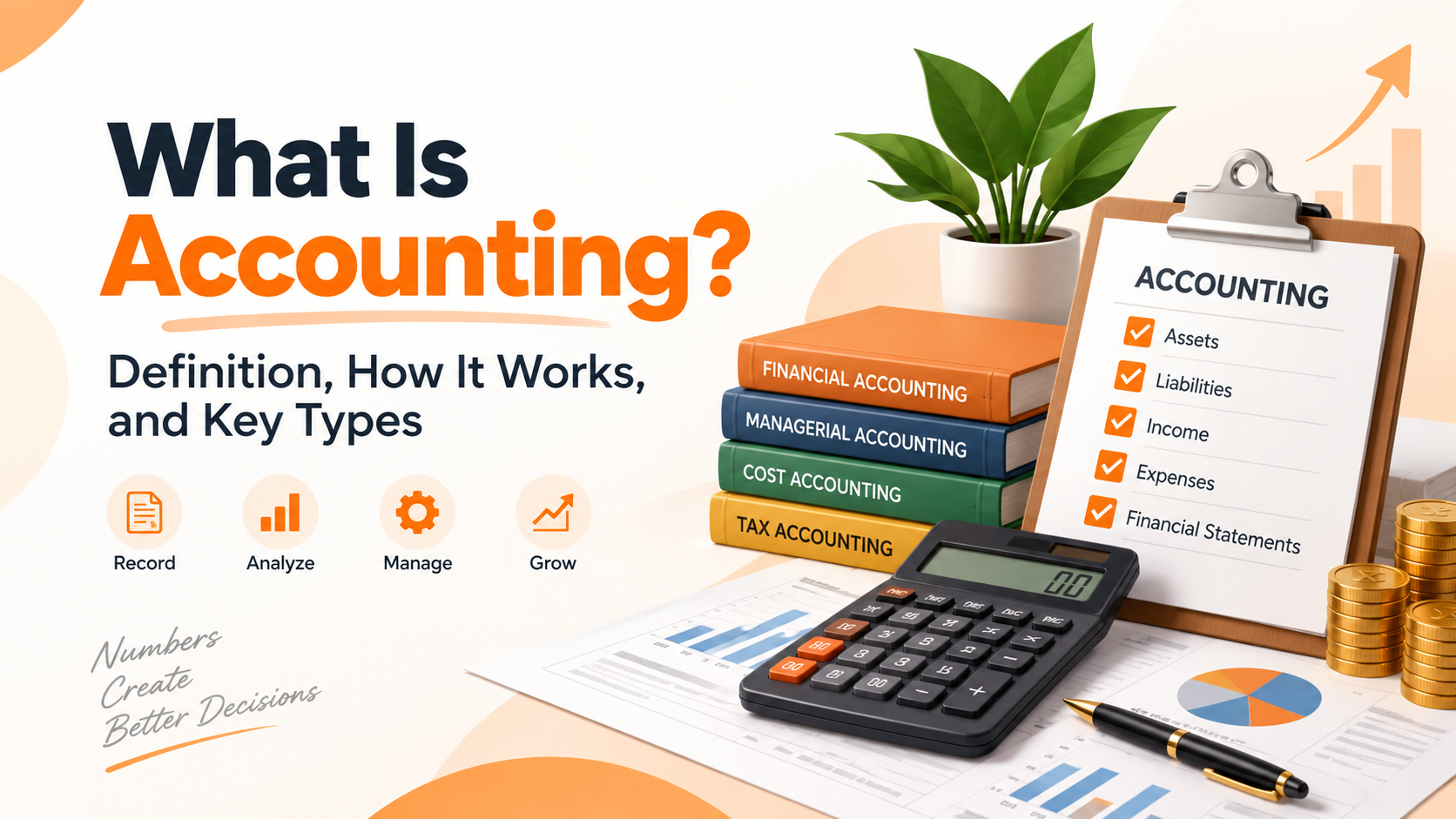
- Financial Accounting: Directs its output toward external capital providers, producing standardized, historical financial reports for equity analysts, commercial banks, institutional bondholders, and regulatory agencies.
- Management Accounting: Prepares forward-looking operational analyses for corporate leadership, delivering rolling cash forecasts, variance analyses, operating budgets, and capital budgeting assessments.
- Cost Accounting: Evaluates direct and indirect production inputs across supply chains, analyzing fixed, variable, and overhead manufacturing expenses to calculate unit gross margins and support competitive pricing models.
- Tax Accounting: Manages compliance with municipal, state, and federal tax codes, prioritizing accurate statutory returns, utilization of research and development tax credits, and optimization of deferred tax assets and liabilities.
- Forensic Accounting: Reconstructs complex corporate accounting records to investigate instances of financial fraud, balance sheet manipulation, commercial litigation disputes, and asset misappropriation.
- Auditing: Conducts independent evaluations of corporate accounting records and underlying internal controls. Internal auditors evaluate operational risk governance, while independent certified public accounting (CPA) firms issue formal assurance opinions on financial statement accuracy.
Fundamental Accounting Standards: US GAAP vs. IFRS
Establishing unified accounting standards gives global capital allocators the comparable, reliable financial metrics required to evaluate enterprise operations objectively.
US GAAP (Generally Accepted Accounting Principles)
Established by the Financial Accounting Standards Board (FASB) and enforced by the U.S. Securities and Exchange Commission (SEC), GAAP operates as a detailed, rules-based framework containing extensive industry directives, including ASC Topic 606 (Revenue from Contracts with Customers) and ASC Topic 842 (Leases).
IFRS (International Financial Reporting Standards)
Governed by the International Accounting Standards Board (IASB) and mandated or accepted across more than 140 countries, IFRS operates as a principles-based system focused on the commercial substance of transactions, applying structured professional judgment across multi-jurisdictional reporting structures.
Practical Accounting Examples
Reviewing real-world accounting examples clarifies how standardized accrual principles govern commercial balance sheet and income statement items.
1. Enterprise Revenue Recognition (ASC Topic 606 / IFRS 15)
- Commercial Context: An enterprise B2B SaaS provider enters into a 12-month software subscription agreement for $120,000 on January 1. The corporate client wires the full $120,000 fee upfront on the contract execution date.
- Cash Basis Distortion: Under cash accounting rules, the entire $120,000 is recorded as gross revenue in January. This creates an artificial profit spike in month one, followed by 11 months of artificial operating losses while the company incurs customer support, server, and administrative expenses.
- Accrual Basis Treatment:
- January 1 Initial Entry: The business debits Cash for $120,000 and credits Deferred (Unearned) Revenue for $120,000, establishing an initial balance sheet liability.
- Monthly Adjusting Entries: At the end of each monthly period, the company debits Deferred Revenue for $10,000 and credits Software Subscription Revenue for $10,000, systematically recognizing earnings as performance obligations are fulfilled over time.
2. Capital Asset Capitalization and the Matching Principle
- Commercial Context: A logistics enterprise purchases an electric commercial vehicle for $600,000 cash. The vehicle has an estimated operational lifespan of 10 years (120 months) and a projected salvage value of zero.
- Accrual Capitalization Treatment: Expensing the full $600,000 cash disbursement in the acquisition period would severely distort operating profitability for that month. Under the accrual matching principle, the purchase is capitalized on the Balance Sheet under Property, Plant, and Equipment (PP&E) and systematically depreciated using the straight-line method:
$$\text{Monthly Depreciation Expense} = \frac{\$600,000 – \$0}{120 \text{ months}} = \$5,000 / \text{month}$$
- Ledger Adjusting Entry: The recurring monthly entry debits Depreciation Expense on the Income Statement for $5,000 and credits Accumulated Depreciation (a contra-asset account offsetting PP&E) on the Balance Sheet for $5,000, systematically matching asset utilization against operational revenue generation over its useful life.
Enterprise Resource Planning (ERP) and Modern Accounting Automation
Cloud Enterprise Resource Planning (ERP) applications have automated routine transactional journal entries, moving corporate finance teams away from manual data entry and toward financial planning and analysis (FP&A), scenario planning, and strategic capital allocation:
- Automated Banking Integration: Cloud ERP engines automatically ingest and reconcile digital bank feeds against ledger transactions, shortening the monthly close process.
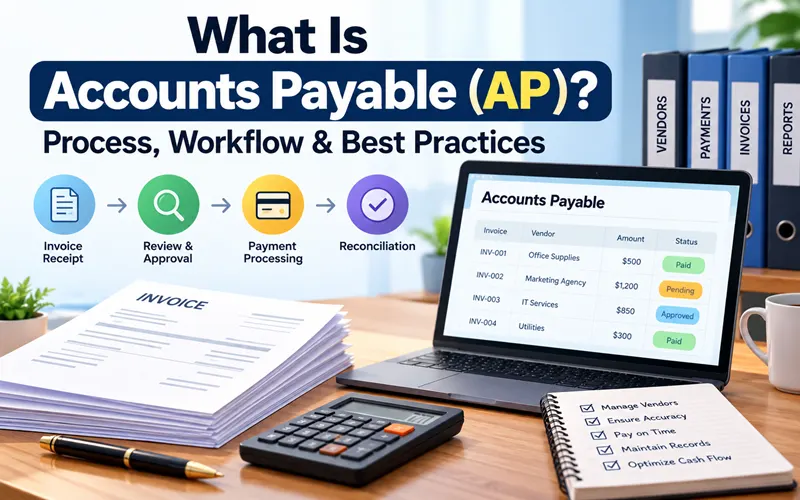
- Automated Accounts Payable Processing: Machine learning algorithms capture invoice lines, dates, and amounts from digital documents, reconciling them against approved purchase orders before initiating payment runs.
- Multi-Currency Financial Consolidation: Cloud accounting engines calculate continuous foreign exchange adjustments across global subsidiaries, accelerating multi-entity financial statement consolidation.
- Audit Trail Verification: Modern financial architectures maintain append-only audit histories of all general ledger adjustments, ensuring the strict data governance demanded by Sarbanes-Oxley compliance regulations.
Frequently Asked Questions
Bookkeeping focuses on the mechanical recording of daily financial transactions, such as logging receipts, paying vendor invoices, and reconciling monthly bank accounts. Accounting interprets, evaluates, and reports on this underlying ledger data to produce formal financial statements, ensure statutory tax compliance, and guide corporate financial strategy.
Under U.S. federal tax law (Internal Revenue Code Section 448), C corporations and partnerships with corporate partners must adopt accrual accounting once their average annual gross receipts exceed statutory inflation-adjusted thresholds ($30 million for 2024 tax filings under IRS Revenue Procedure 2023-34, and $31 million for 2025/2026 under Revenue Procedure 2024-40). Beyond statutory tax rules, high-growth businesses transition to accrual accounting when applying for commercial bank loans, raising institutional venture capital, or completing audited financial reviews.
The Balance Sheet: Summarizes an enterprise’s cumulative assets, liabilities, and shareholders’ equity at a specific reporting date.
The Income Statement (P&L): Details gross sales revenues, Cost of Goods Sold (COGS), operating expenses, and net profit over a given fiscal timeframe.
The Statement of Cash Flows: Details total liquidity adjustments across operational, investing, and financing business activities over the reporting period.